
Asset tracking is more than recording serial numbers. A useful system should show what the organization owns or uses, who is responsible for each item, where it is normally located, which data or software it contains, and what should happen when it is transferred, lost, repaired, or retired. Automation can keep records current across a large device fleet, but it also increases the amount of information collected from endpoints and employees. Manual tracking collects less telemetry but becomes difficult to maintain as assets move between offices, homes, warehouses, and contractors. The right method depends on ownership, connectivity, data sensitivity, mobility, and privacy risk. Most organizations need several tracking methods rather than one platform applied to every asset.
Hidden Costs of Manual Control: The “Invisible Losses” Enterprises Often Overlook
Spreadsheets and paper logs can work for a small, stable inventory. Their limitations appear when several people edit separate copies, assets move frequently, or the organization cannot reconcile purchase, assignment, support, and disposal records.
Wasted High-Value Engineering Hours: Manual audits require staff to inspect labels, verify users, compare purchase records, and correct duplicate or missing entries. The original claim that every organization loses hundreds of engineering hours annually is unsupported. The actual cost should be calculated from audit frequency, asset count, average inspection time, and employee labor cost.
The Cost of “Ghost Assets”: An asset may remain in accounting, software licensing, insurance, or maintenance records after it has been lost, replaced, returned, or destroyed. Better lifecycle records can expose unused software and devices, but organizations should calculate savings from their own invoices rather than applying a universal percentage. NIST describes IT asset management as a way to track, manage, and report on information assets throughout their lifecycle and to identify applications that are actually being used.
Compliance and Audit Exposure: Incomplete records can make it difficult to demonstrate ownership, access controls, disposal procedures, and the location of systems containing sensitive information. However, an ISO/IEC 27001 audit or SOC 2 examination does not itself issue regulatory fines. A weak asset inventory may lead to audit findings, certification problems, contractual concerns, or an inability to demonstrate compliance with a separate law. ISO/IEC 27001 defines requirements for an information security management system, while SOC 2 examines controls relevant to security, availability, processing integrity, confidentiality, or privacy.
Technical Essence of Automation: When to Use Agent-based vs. Agentless?
Agent-based tracking installs software on the endpoint. Agentless discovery uses existing network protocols, cloud APIs, management interfaces, or authenticated remote connections without installing a dedicated tracking component on every target.
When to Deploy Agent-based Tracking: Agents are suitable for organization-owned laptops, workstations, and servers that regularly operate outside the office. Depending on the product and configuration, an agent may report hardware details, installed software, encryption status, patch condition, and device compliance while the endpoint is connected to the internet.
An inventory agent should not be confused with a full endpoint-management platform. Remote lock, selective corporate-data removal, or factory reset requires supported management enrollment and operating-system capabilities. Microsoft Intune, for example, distinguishes a full wipe which removes personal and organizational data from a retire action intended to remove managed company data while preserving personal content.
When to Deploy Agentless Tracking: Agentless discovery is useful for printers, switches, routers, storage devices, virtual machines, and other equipment that cannot support an agent. It may use protocols such as SSH, WinRM, SNMP, APIs, or cloud-provider inventory services. Agentless tools reduce endpoint installation work but depend on network reachability, credentials, supported protocols, and scan frequency. They may not see a remote laptop that is disconnected from the corporate network
Agentless discovery is not automatically the best solution for BYOD. A personal device may appear on a network scan, but that does not give the organization a reliable lifecycle record or permission to collect detailed personal-device information. BYOD policies should define what is collected, why it is needed, and how organizational data is separated from personal data.
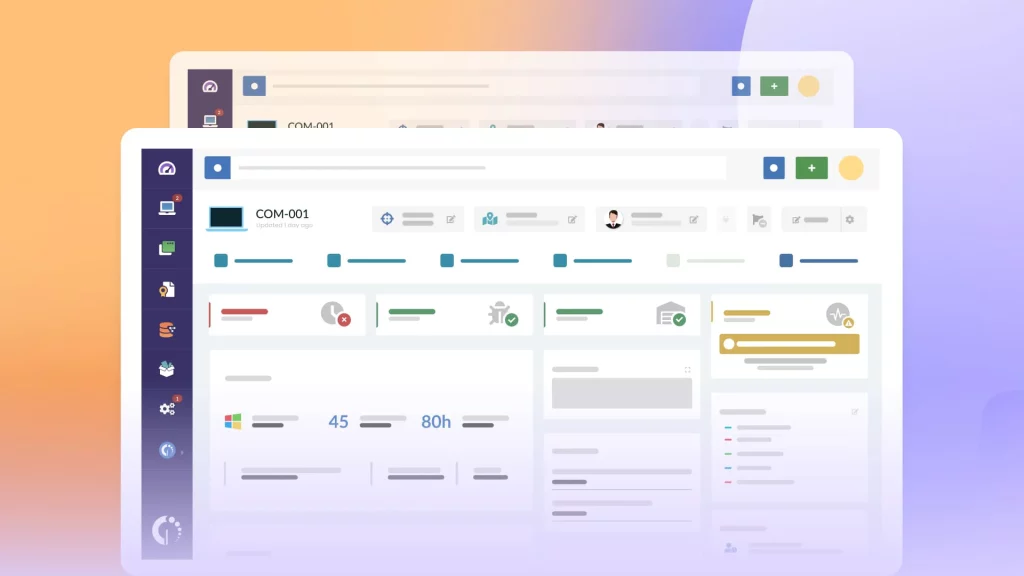
Automated QR Code Tracking Solutions for Non-IT Assets
Furniture, tools, laboratory instruments, medical equipment, and machinery may have no operating system or network connection. QR or barcode labels can connect these assets to a central record without requiring endpoint software.
Digitized Custody Handovers: Each tag should resolve to a unique asset record. A scan can open a form for the employee to confirm the custodian, department, condition, and location. GPS capture is not an inherent feature of a QR code. It works only when the mobile application requests location data, receives the necessary permission, and is configured to attach that data to the transaction.
Lifecycle State Updates: A scan can simplify maintenance requests, transfers, inspections, and damage reports. Required fields, controlled status values, and user authentication reduce ambiguity more effectively than a free-text note.
Centralized Data Synchronization: Scan results should update one authoritative inventory rather than create another isolated record. Offline scanning may be necessary in warehouses or field locations, but the system should identify unsynchronized entries and prevent two employees from assigning the same asset at the same time.
A dynamic QR code can allow the destination record or workflow to change without replacing the physical label. It does not make the physical asset continuously trackable. The record changes only when someone scans the tag or another integrated system submits an update.
Securing Sensitive Data: Lifecycle Workflows and Data Sanitization Standards
Asset tracking should record data-handling obligations as well as physical possession.
Data Minimization: Collect only the information needed for inventory, security, support, or legal requirements. Continuous off-hours location tracking, personal browsing history, and unrelated application activity create privacy risks and may be unnecessary for asset management. BYOD programs should separate organizational data from personal data and explain monitoring practices to users.
Standardized Data Sanitization: NIST SP 800-88 Rev. 2 recommends choosing sanitization controls according to the storage technology, information sensitivity, intended disposition, and required assurance. Its principal outcome categories include clear, purge, and destroy. A generic remote wipe command should not automatically be described as NIST-compliant without verifying what the device and management platform actually erase.
DoD 5220.22-M should not be presented as a current universal wiping standard. The NISPOM rule in 32 CFR Part 117 replaced the earlier DoD policy for the National Industrial Security Program.
Audit Certificate Trails: Sanitization records should identify the media, serial number, method, tool and version, verification result, final destination, responsible person, and date. NIST provides a sample Certificate of Sanitization, but it is an example record format rather than a requirement for a cryptographically signed certificate in every organization.
Countering “Shadow AI” and Handling Data Subject Requests
Unapproved AI applications can create risk when employees submit confidential or personal information to tools that the organization has not assessed. Asset and software inventory may help identify installed applications, but detection coverage depends on the operating system, browser-management configuration, endpoint product, and reporting permissions.
Automated Shadow AI Detection: Agent-based tools may report installed desktop applications and other endpoint software. They do not necessarily detect every browser extension, web application, private account, or AI feature embedded in an approved product. Inventory findings should be combined with access controls, network logs, data-loss prevention, procurement rules, and employee guidance. NIST notes that software asset management can provide timely information about software installed, authorized, and used on organizational devices.
Streamlined DSR Execution: Privacy requests may require an organization to locate personal data across business systems, email, collaboration tools, archives, and employee devices. Under the GDPR, organizations generally must respond to requests without undue delay and, in principle, within one month.
An asset inventory can show which devices or custodians may hold relevant data, but it does not replace data mapping or legal review. The claim that automation reduces DSR work by 80% has no reliable universal source. Results depend on data architecture, retention rules, search tools, request scope, and the amount of unstructured data. Personal devices may also fall within a search when employees are permitted to store organizational personal data on them.
Risk-Based Asset Classification: Replacing Unsupported Savings Claims
The “Sandwich Risk Assessment Model” described in the original article is not a recognized ITAM framework. A defensible approach is to classify assets using documented factors such as data sensitivity, business criticality, ownership, connectivity, mobility, replacement cost, and recovery requirements.
Proven Financial Return on Investment (ROI):
No credible evidence supports universal annual savings of 645,000 USD or a guaranteed reduction of 3,000,000 USD in losses.
Organizations should calculate ROI using their own baseline. Relevant measures include audit labor, unassigned licenses, maintenance paid for retired equipment, unrecovered devices, help-desk effort, disposal costs, inventory accuracy, and the time required to isolate a lost endpoint.
Financial benefits should be recorded only after deployment and compared with software subscriptions, implementation work, label replacement, device agents, training, integration, and ongoing administration.
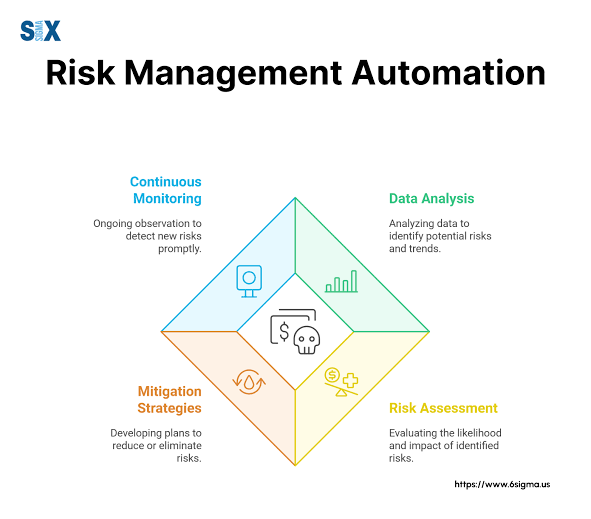
Which Asset Tracking Method Should Your Enterprise Choose?
No single method fits every asset.
High-Risk Assets: Organization-owned servers, confidential laptops, and managed mobile devices generally need endpoint inventory, encryption status, assigned ownership, lifecycle controls, and tested incident actions. Remote wipe should be used only through a supported management platform and according to a documented response procedure.
Office Infrastructure and BYOD: Network discovery is useful for managed infrastructure. BYOD requires a separate policy that limits collection and separates company information from personal content. Apple’s User Enrollment and Microsoft’s retire or selective-wipe options illustrate approaches designed to preserve personal data while removing managed organizational information.
Facilities and Auxiliary Equipment: QR or barcode labels combined with scheduled physical audits are often sufficient for furniture, tools, and equipment that cannot report their own status. Audit frequency should reflect mobility, value, safety impact, and loss history.
Common Pitfalls When Balancing Manual Control and Automation
Mistake 1: “Automation Equals Zero Human Oversight”: Automated discovery can produce duplicates, stale assignments, incomplete records, and false matches. Human owners still need to approve transfers, investigate anomalies, and confirm disposal.
Mistake 2: “Installing Agents on Everything Without Classification”: Monitoring personal devices without a clear purpose, policy, and privacy controls can collect excessive information. Ownership and risk should determine the enrollment model.
Mistake 3: “Ignoring Low-Value Legacy Hardware”: A storage device may have little resale value while still containing sensitive information. Disposal controls should follow data sensitivity and storage technology rather than the current market price of the hardware.
Selecting an asset tracking method requires a balance between visibility, operating cost, data sensitivity, device ownership, and employee privacy. Agent-based inventory suits managed endpoints that require regular reporting. Agentless discovery covers reachable network and cloud infrastructure. QR labels support non-connected physical assets, while manual verification remains necessary for custody changes and disposal. A sound program connects these methods to one lifecycle record, limits unnecessary monitoring, distinguishes corporate devices from BYOD, and uses current sanitization guidance such as NIST SP 800-88 Rev. 2. The goal is not to automate every asset. It is to apply enough control to each asset’s actual risk.