
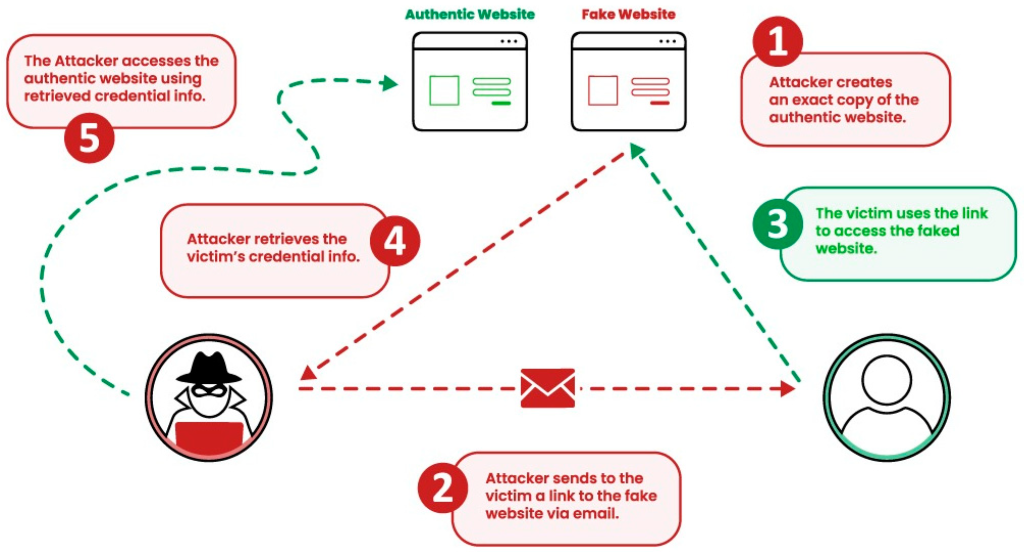
Fake investment websites often copy the name, logo, address, registration number, and staff profiles of legitimate banks, brokerages, and asset managers. A professional design or an accurate company name does not prove that the website is operated by the real firm.
The key distinction is between verifying the company and verifying the channel. A business may be properly licensed while the website contacting you is an impersonation site using the company’s genuine regulatory details. The FCA describes these operations as “clone firms,” while the SEC warns that impersonators may copy registered firms and investment professionals to appear legitimate.
Before opening an account, uploading identification, installing an app, or transferring money, independently verify the exact domain and contact details.
3-Step Fast Verification Process to Confirm an Investment Website’s Official Status
Contact Support Directly via Publicly Listed Channels
Do not use the phone number, email address, QR code, or live chat displayed on the website you are checking. If the site is fraudulent, every contact method on it may connect to the same scam operation.
Find the institution through a source you already trust, such as an existing banking app, previous account statement, signed contract, regulator register, stock-exchange profile, or branch office. Contact the company through those independently obtained details and ask whether it operates the exact domain, including its spelling and subdomain.
The FCA specifically advises consumers approached by an unfamiliar financial business to respond through the contact information shown in its official Firm Checker rather than using details supplied by the caller or website.
Search Regulatory Databases Managed by Government Authorities
Check whether the company is licensed for the service being offered. A firm authorized to provide one financial product may not have permission to provide every type of investment, brokerage, lending, or crypto-related service.
Use the regulator responsible for the relevant market. Examples include the State Securities Commission of Vietnam, the UK Financial Conduct Authority, and the SEC or FINRA databases in the United States. Vietnam’s State Securities Commission states that its website publishes the list of licensed securities companies.
Compare more than the company name. Check the license number, legal entity, registered address, authorized activities, telephone number, email address, and website details when available.
Not every regulatory database records all official domains. A missing URL is therefore a warning that requires further verification, not automatic proof of fraud. Conversely, a matching license number does not make the website genuine because clone sites frequently copy real registration details.
Cross-Reference the URL Address Against Public Corporate Disclosures
Search for the domain in official annual reports, regulatory filings, stock-exchange announcements, verified app-store listings, and the company’s established social accounts.
Start from an independently confirmed corporate website and follow its links to trading portals, client dashboards, mobile apps, and regional subsidiaries. Do not work backward from the suspicious site’s footer because copied pages may contain accurate addresses and legal text taken from the real firm.
Public filings do not always list every customer portal or campaign domain. When the URL cannot be confirmed through published materials, contact the institution before entering personal or financial information.
How to Closely Inspect Domain Names (URLs) to Detect Fake Websites
The address bar can reveal impersonation attempts, but no URL pattern proves legitimacy by itself. Read the domain from right to left and identify the registered domain immediately before the top-level suffix.
Typosquatting (Misspelled Domains)
Scammers may add, remove, replace, or rearrange characters in a familiar name. A fake site might use an extra letter, a hyphen, a misleading abbreviation, or an added word such as “secure,” “invest,” or “global.”
Do not judge the address from a search-result title or hyperlink label. Open the browser address bar and compare the complete hostname character by character with the domain confirmed by the institution.
Subdomain Exploitation
In an address such as:
vps.dautu-taichinh-abc.com
the registered domain is normally dautu-taichinh-abc.com. The word vps is only a subdomain controlled by whoever owns the main domain.
The same principle applies to addresses such as:
official-bank.login-example.com
A recognizable brand name placed at the beginning does not mean that the brand owns the website.
Cheap and Suspicious Top-Level Domains (TLDs)
The original article incorrectly treated extensions such as .xyz, .top, .app, and .club as evidence of fraud. Legitimate and fraudulent sites can use almost any available extension. Likewise, .com, .org, and country-code domains do not guarantee that a financial institution operates the site.
Focus on whether the complete domain matches the firm’s independently verified address. The SEC has warned that scammers may even use addresses containing official-looking terms or extensions such as .org and .gov fragments to create false credibility.
Homograph Attacks (Lookalike Characters)
Some domains use characters from different writing systems that resemble Latin letters. Others replace letters with numbers or use similar-looking combinations such as lowercase l, uppercase I, and the number 1.
Copy the URL into plain text when necessary. Avoid following shortened links, QR codes, sponsored search advertisements, or links sent through private chat until the destination has been independently confirmed.
Abnormal Indicators on the Interface and Content of Fake Websites
A sophisticated impersonation site may contain correct grammar, working menus, copied legal documents, and a valid HTTPS connection. Interface problems are supporting clues rather than a reliable authentication method.
Unrealistic Guaranteed Fixed Returns
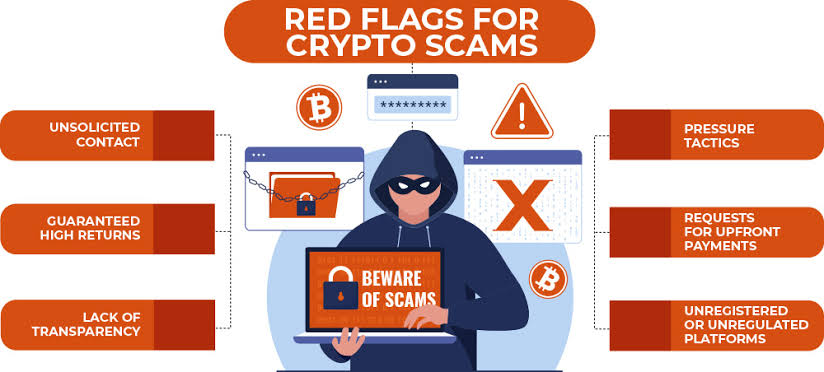
Promises of high returns with little or no risk are a major investment-fraud warning. The FTC states that scammers frequently promise guaranteed income, profits, or returns, while Investor.gov identifies claims of high returns with little risk as a common fraud indicator.
This should be distinguished from legitimate products that disclose a contractual interest rate, insurance conditions, issuer risk, and regulatory documentation. The warning sign is an implausible combination of high profit, certainty, short timeframes, and little or no risk.
Spelling Errors, Font Inconsistencies, and Dead Links
Broken menus, copied pages, inconsistent company names, and unfinished legal sections may indicate a hastily assembled site. However, a polished interface is not proof of legitimacy, and an occasional broken link on a real site does not prove fraud.
Compare legal documents with the institution’s confirmed website. Look for copied terms that name another company, an unrelated jurisdiction, or a service the alleged firm does not provide.
Missing Corporate Identification and Fake Addresses
Check whether the legal entity behind the site matches the entity in the regulator’s records. Verify addresses through official filings rather than assuming that a location is real because it appears on a map.
A map listing can be created or edited, and a genuine office address can be copied by an impersonator. The address, license number, domain, and contact information must match as a group.
Over-Reliance on the SSL Padlock (https://)
HTTPS encrypts information between your browser and the website. It does not prove that the website belongs to the company it claims to represent.
Chrome advises users to check the site name even when the connection is secure, and the FTC notes that a scammer can encrypt a fraudulent website while still stealing information submitted to it.
Common Scam Tactics Accompanying Fake Investment Websites
A fake trading portal is often one stage of a longer social-engineering process. The first contact may occur through social media, a dating app, an investment group, an unsolicited message, or someone impersonating a financial adviser.
Manipulative Chat Groups (Telegram, Zalo, WhatsApp)
Fraudsters may create groups in which controlled accounts post profit screenshots, praise an alleged expert, and pressure new members to invest quickly. The visible account balance may be fabricated and may not represent real assets.
Do not trust a website, account manager, or payment instruction simply because many group members appear to support it. Verify the financial company and exact domain through independently obtained regulatory and corporate sources.
Directing Payments to Personal Bank Accounts
A request to transfer investment funds to an unrelated individual, cryptocurrency wallet, or frequently changing beneficiary is a serious warning sign.
However, the rule should not be simplified to “personal account always equals fraud.” Payment processors, trustees, custodians, and legally designated client-money accounts may use names different from the public brand. Confirm the exact beneficiary and account number through the firm’s independently verified support channel before sending funds.
Forcing Unauthorized App Installation (APK Files / Internal Profiles)
An unsolicited request to install an APK, desktop program, browser extension, remote-access tool, or device-management profile increases the risk of credential theft and device compromise.
Enterprise and internally distributed apps can have legitimate uses, but Apple describes enterprise apps as proprietary software intended for an organization’s internal users. A retail investment customer should verify why such an installation is required and who controls the profile before approving it.
“Trading Experts” Demanding Withdrawal Fees
Fake platforms may display fictitious profits and then demand additional payments described as taxes, commissions, verification charges, or account-release fees.
Investor.gov classifies requests to pay money before supposed investment proceeds are released as advance-fee fraud. Paying the requested amount generally leads to further demands rather than a successful withdrawal.
What to Do If You Have Disclosed Information or Deposited Money into a Fake Website
Freeze Your Bank Accounts and Digital Banking Apps Immediately
Contact the bank, card issuer, wallet provider, or transfer service immediately. Explain how the payment was made and ask whether the transaction can be stopped, recalled, disputed, or reversed.
Do not assume that every account must be frozen automatically. Follow the financial institution’s fraud team instructions regarding cards, online banking access, transaction limits, and account replacement. The FTC recommends contacting the payment provider promptly and requesting reversal where possible.
Change All Passwords and Security PINs
Change credentials that were entered on the fake site or reused elsewhere. Start with the email account connected to banking and password recovery.
Enable multifactor authentication and review active sessions, recovery addresses, forwarding rules, registered devices, and recent login activity. Do not approve unexpected authentication requests.
If your financial accounts are still linked to a phone number that you no longer control after moving abroad, follow the steps in Keeping Access to Important Online Services After Changing a Phone Number Overseas to update recovery details through official channels before the old number is reassigned to another person.
Document All Evidence
Preserve the full URL, screenshots, chat records, telephone numbers, account names, wallet addresses, payment receipts, transaction IDs, emails, downloaded files, and the time of each event.
Do not edit the original evidence. Store copies safely and redact personal information before posting any warning publicly.
Report the Incident to Cybercrime Authorities
Report the incident to the bank, relevant financial regulator, local police or cybercrime authority, and the platform through which contact occurred. Reporting does not guarantee recovery, but it may help block accounts, identify related cases, and warn other users.
Alert the Legitimate Financial Company and Community
Notify the impersonated company through its confirmed fraud or security channel. The firm may publish a warning, request domain suspension, or notify customers.
Avoid publicly accusing identifiable individuals without evidence. Share only verified details and remove identity documents, account numbers, and other sensitive information from community warnings.
A legitimate company name, copied license number, polished interface, HTTPS connection, and professional support agent do not prove that an investment website is official. Verify the exact domain through independently obtained company contacts, compare the complete entity details with the appropriate regulatory register, and confirm payment instructions before sending money.
Pause whenever a website promises guaranteed high returns, creates urgency, requests unusual payment methods, or demands additional fees before allowing a withdrawal. Do not continue communicating through the suspicious site. Open the regulator’s register or the institution’s established app and contact the company using details obtained from those independent sources. If money or credentials have already been provided, contact the relevant financial providers immediately and preserve all evidence.